She Exposed Beijing's Secret Police. Now Its AI Porn Deepfakes Smear Her — as Ottawa Signs a Pact With the Same Chinese Ministry

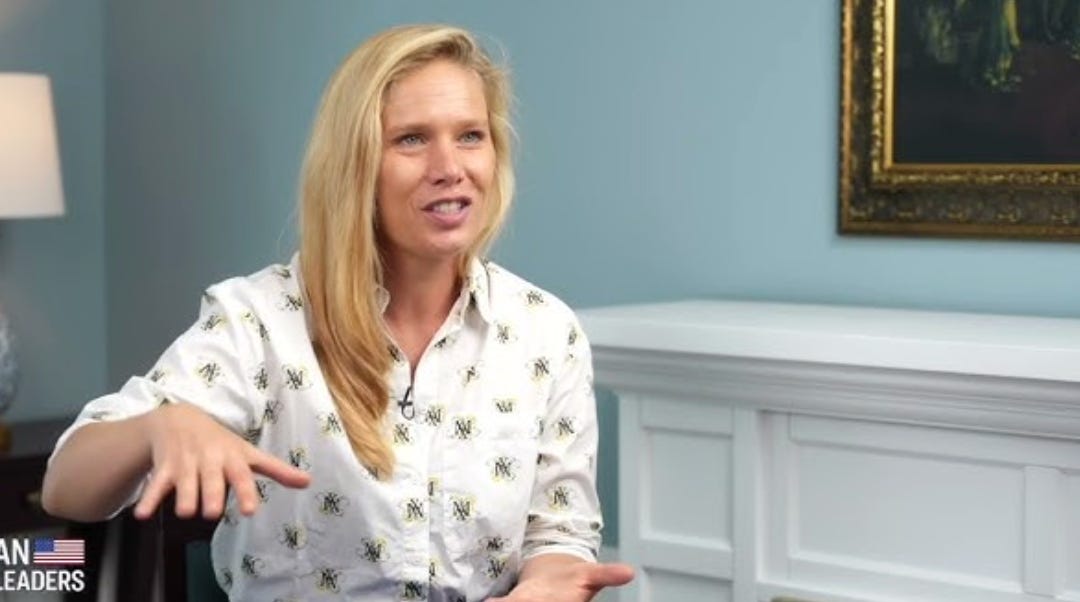
OTTAWA — Laura Harth helped expose Beijing’s “overseas police service centers” as a global architecture of transnational repression — clandestine outposts that Harth and Safeguard Defenders linked to China’s Ministry of Public Security, triggering investigations from Europe to North America.
Now, Harth says, the machinery she helped reveal has turned on her with an AI-generated sexualized deepfake smear campaign that her organization identifies as part of the same Chinese police-linked repression ecosystem documented by the U.S. Justice Department and other security researchers.
Harth, the Safeguard Defenders campaign director, who is based in Italy, has disclosed that she was targeted through the Spamouflage network in recent weeks — a surge that appeared to emerge as a New York prosecution her reporting set in motion moved toward a verdict.
She argued that Mark Carney’s government had signed a little-explained memorandum of understanding with the same Chinese Ministry of Public Security whose networks are central to documented transnational repression — a move she said clashes with Ottawa’s prior role in pushing the issue onto the G7 agenda.
The attribution of the online smear campaign against Harth — similar in nature to an attack on Canadian Yao Zhang — is not in dispute among Western institutions.
In February 2026, OpenAI named Safeguard Defenders as a target of what it called industrialized transnational repression from China using AI, run through an account tied to Chinese law enforcement. The U.S. Department of Justice has indicted dozens of officers of China’s Ministry of Public Security in connection with it, Harth noted in an article urging democratic nations to counter China’s AI deepfake pressure against critics of Beijing.
“The same operators ran a campaign to discredit Japan’s Prime Minister Sanae Takaichi, traced by OpenAI to AI-generated content circulating on X, YouTube and Japanese platforms,” Harth’s article says. “Meta has identified the same network — Spamouflage — as the largest covert influence operation in the world and traced it to Chinese law enforcement.”
Acknowledging the impact of the campaign against herself, Harth added: “I refuse to give the perverted minds in Beijing the satisfaction of my silence.” And pointing toward Carney’s government, she added that “these are the same perverted ‘public security’ minds that the country leading last year’s G7 efforts on countering transnational repression signed a Memorandum of Understanding with in January.”
Asked by The Bureau about the Carney government’s non-transparent partnership with the entity she says is behind the repression attacks on her, Harth said it is odd “to see the same country that spearheaded international efforts to put the issue of transnational repression at the top of the agenda is simultaneously legitimizing one of the very same counterparts (MPS) that is known to be part of biggest perpetrating apparatus of the practice around the world.”
“As someone who works with its victims on the daily, as someone whose colleagues have been relentlessly targeted for years, as someone who herself has been a persistent target, it’s honestly just staggering to see democracies walk into the same trap time and again,” Harth said.
The pattern of Chinese police targeting voices that Beijing evidently views as a threat to President Xi’s authority is familiar in Canada. As The Bureau and the CBC have reported, Quebec-based accountant-turned-influencer Yao Zhang became the target of the same kind of attack after she travelled to Taiwan in January 2024 and clashed with pro-Beijing advocates in Ottawa: AI-generated sexually explicit deepfake imagery that Global Affairs Canada attributed to the same Spamouflage network that attacked Laura Harth.
The case that gives Harth’s research judicial confirmation reached a verdict this month.
On May 13, 2026, a Brooklyn federal jury convicted Lu Jianwang, a 64-year-old naturalized U.S. citizen known as “Harry Lu,” of acting as an illegal agent of the People’s Republic of China and of obstruction of justice for destroying evidence of his communications with his Ministry of Public Security handler.
Prosecutors said Lu helped open and operate what authorities described as the first known overseas Chinese police station in the United States, occupying a full floor of a Chinatown office building, and was tasked by Beijing with locating a pro-democracy advocate living in California. Harry Lu’s co-defendant, Chen Jinping, pleaded guilty in December 2024 to conspiring to act as an agent of the PRC; both await sentencing.
The conviction grew directly out of Safeguard Defenders’ September 2022 investigation, which documented more than 100 of the outposts in over 50 countries and traced them to the Ministry of Public Security. It was the kind of accountability Harth has long argued is possible. “I hope the outcome of cases like this will encourage victims of the PRC’s transnational repression to come forward in greater numbers,” Harth said when the New York case first reached a plea, adding that she hoped the dozens of countries where stations had been uncovered would “take note and take action.”
The jury in New York heard that operators of the clandestine Fuzhou public security station exchanged numerous messages with Ministry of Public Security officers, including arrangements for Chinese technicians to install a Huawei cloud system connecting the New York operation to the Fuzhou Public Security Bureau. Prosecutors said evidence tied the New York operators to similar local leaders in Toronto, Spain, France and the Netherlands, indicating a global architecture directed by the Ministry of Public Security that tasked local proxies to run the illegal stations.
This is the same Ministry of Public Security with which the Carney government signed its January 2026 policing pact — and which Ottawa refuses to disclose. The Memorandum of Understanding on Cooperation in Combating Crimes, signed during Carney’s Beijing visit, was one of several agreements concluded on the trip; while the texts of others have been released, the RCMP has declined to make this one public. A spokesperson said the force “will not unilaterally make public or share the contents of an MOU with a third party without the concurrence of the other party,” and was “not releasing the contents of the MOU at this time.”
That refusal has drawn cross-party demands for disclosure. NDP public safety critic Jenny Kwan, in a May 12 letter to Public Safety Minister Gary Anandasangaree and Foreign Affairs Minister Anita Anand, noted that the Ministry of Public Security has been linked repeatedly by international human rights organizations, journalists and democratic governments to intimidation campaigns abroad, and demanded to know whether safeguards exist to prevent Canadian information from being used against dissidents, human rights defenders, journalists or diaspora communities. Before Kwan demanded transparency, Conservative public safety critic Frank Caputo made parallel demands, calling the secrecy “unacceptable.”
For Harth, the contradiction in Ottawa should be of concern to Canadian citizens: “Here’s a very basic question everyone should ask themselves: who made the request for an MoU with the RCMP? And subsequently: who stands to gain from this agreement? If the answer is — as I suspect — the PRC on both counts, why on earth should Canadians assent to it?”


Who knows what the CCP have for dirt on Mark Carney. It could be financial corruption or something much darker. I'm sure they had some very dark information on Trudeau as well. Dr Michael Pillsbury writes about China's elite capture methodology in 'The Hundred Year Marathon'...a fascinating read and eye opener on China's plan to rule the world.
The Carney group should be charged with TREASON